

 macOS
 Windows
 Linux
 Android
 Chrome extension
 Slack app


Tools Sales already uses.
HubSpot, the inbox and the calendar the team already lives in.


Three more from the same desk.
A quote against the signed order, a follow-up from Tuesday’s notes, two weeks of mail already summarised. Each answer carries the sources it used.
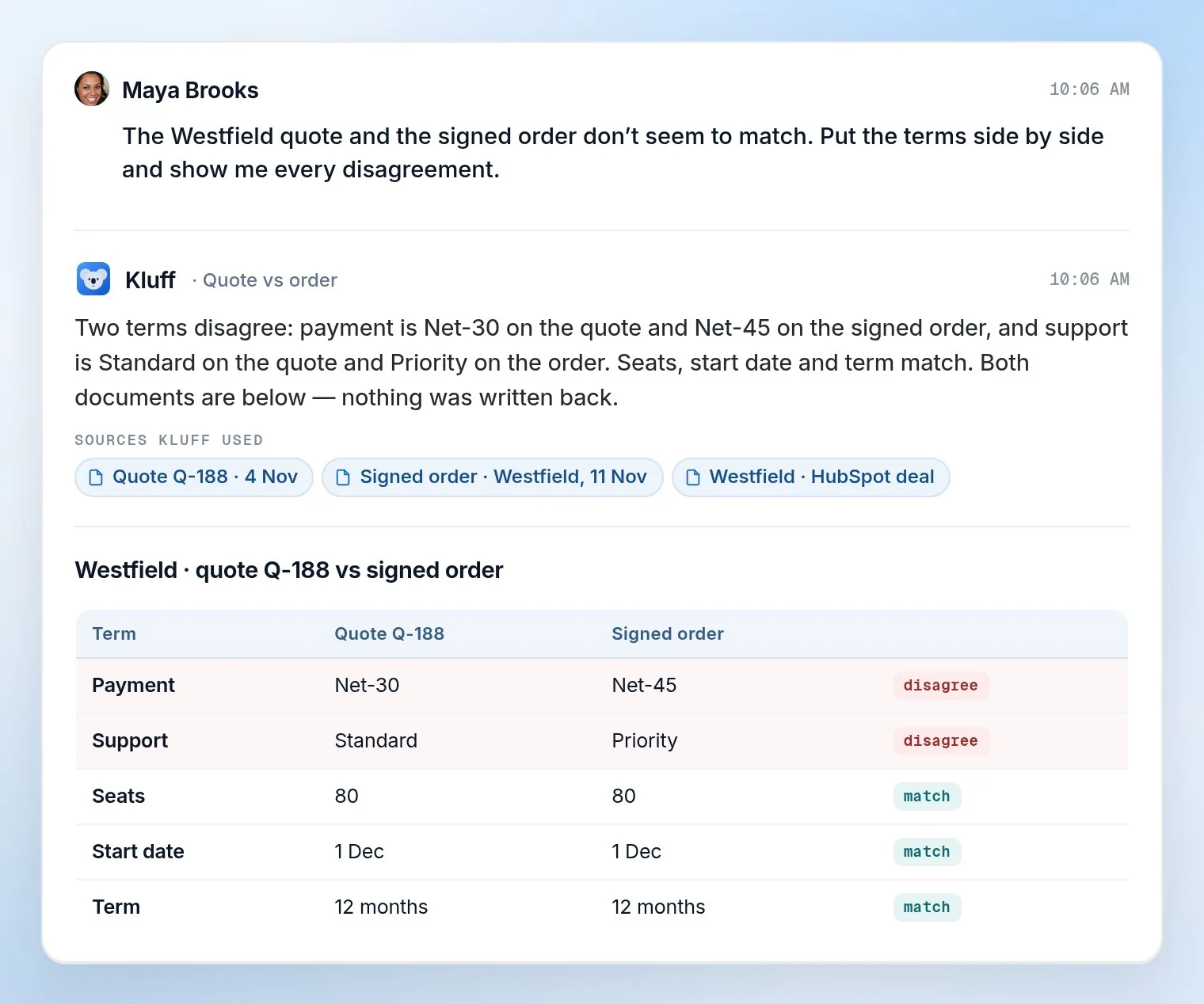
The Westfield quote and the signed order don’t seem to match. Put the terms side by side and show me every disagreement.
Payment terms and support level don’t agree; seats, start date and term do. Both documents are on the same table, and neither one was overwritten.
Answered from quote Q-188, the signed order, and Westfield’s HubSpot record.
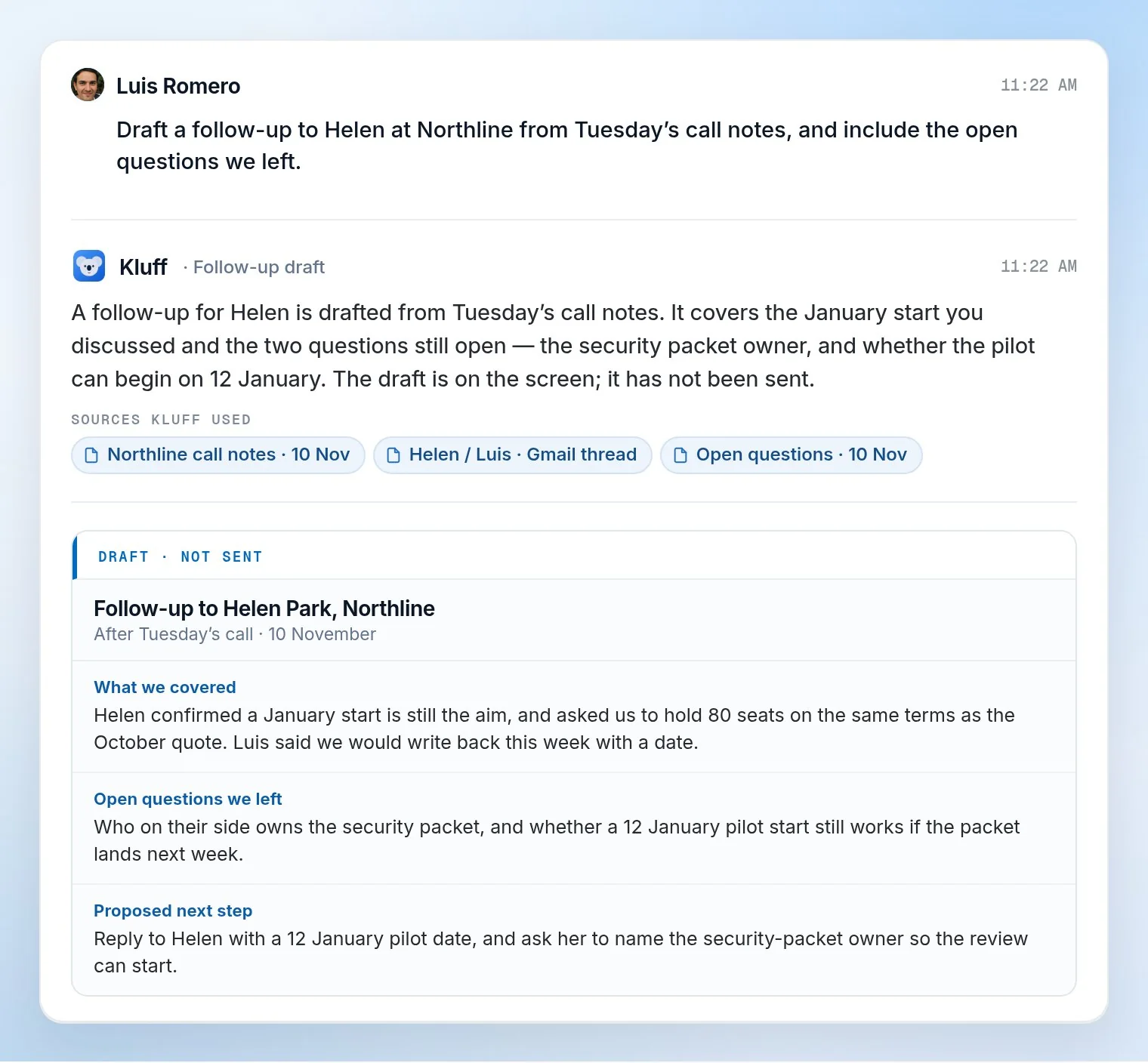
Draft a follow-up to Helen at Northline from Tuesday’s call notes, and include the open questions we left.
The draft is written from Tuesday’s notes and the open questions already on the thread — a January start, and who owns the security packet. It hasn’t been sent.
Answered from Tuesday’s call notes, the Northline thread, and the open questions list.
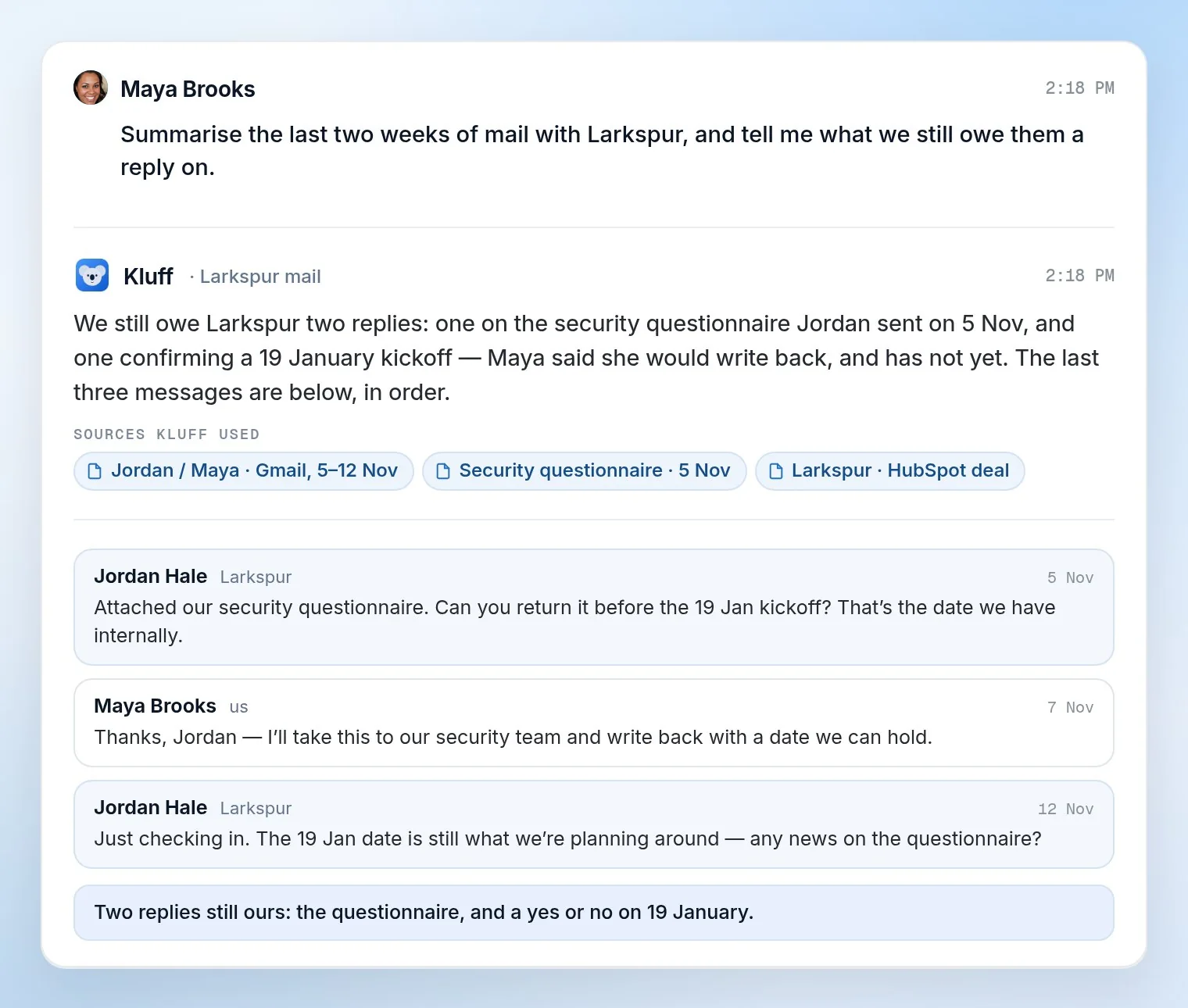
Summarise the last two weeks of mail with Larkspur, and tell me what we still owe them a reply on.
Two things are still waiting on us: a reply on the security questionnaire, and confirmation of the January kickoff. The last three messages are on the screen, in order.
Answered from the Larkspur Gmail thread, Maya’s last outbound, and the questionnaire on file.
What Kluff knows about your sales team
People, accounts, the last call and the tools already on the desk — one picture of the record, not a dashboard of numbers.

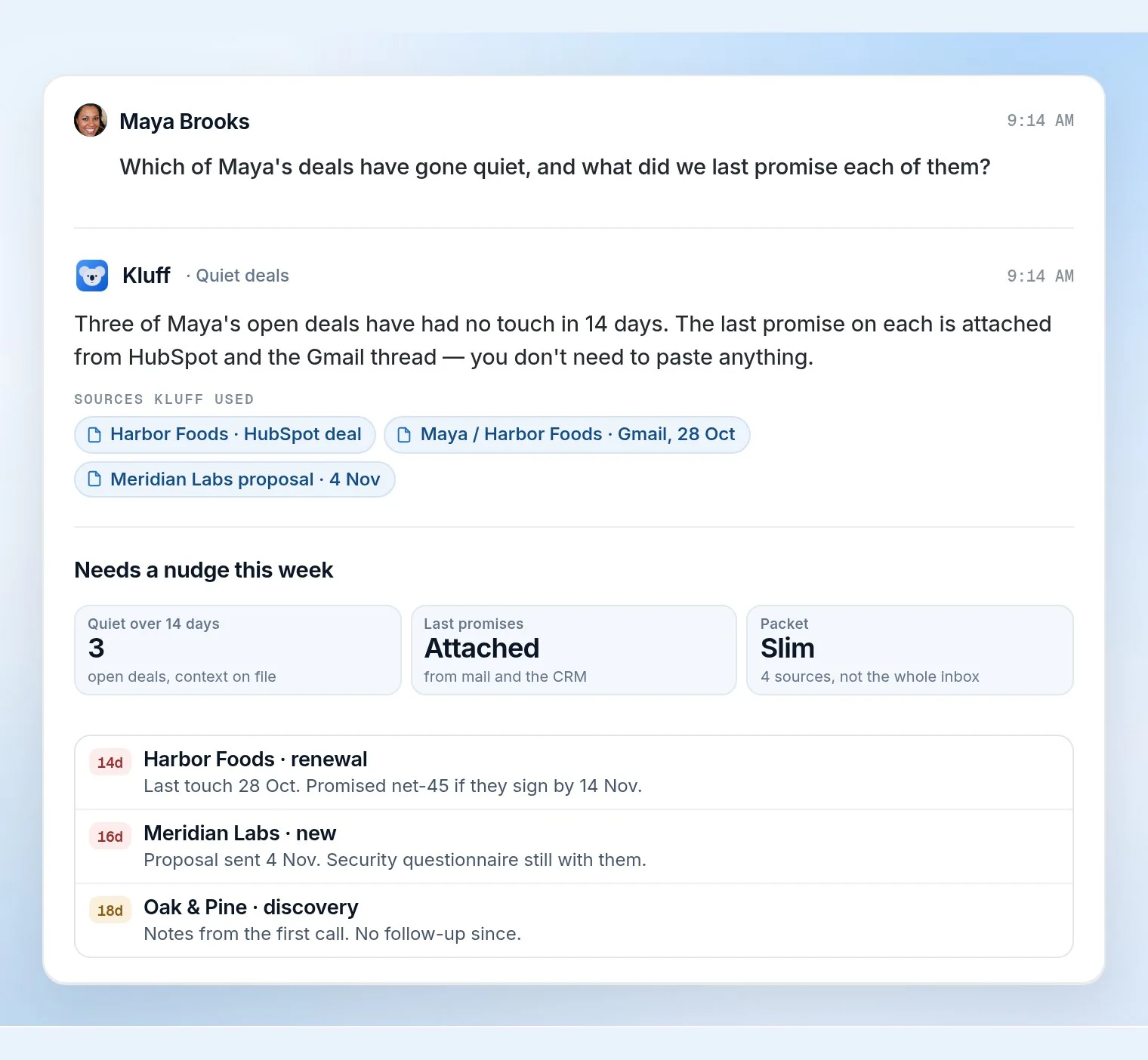
Which of Maya's deals have gone quiet, and what did we last promise each of them?
AI agents for sales
AI agents for sales are software agents that use customer data and connected tools to carry out sales tasks. Kluff agents can research accounts, prepare deal briefings, draft follow-ups and identify CRM records that need attention, using the information your team makes available.
AI sales agents can gather account information, summarize customer conversations, prepare outreach and review pipeline changes. In Kluff, agents can combine CRM records, email and calendar context to flag quiet deals, expiring quotes and outstanding commitments. Available actions depend on the connected tools and access granted.
Kluff agents can update CRM records when a connected integration exposes the required action and the agent has access. They can also compare records with customer correspondence and propose changes for review. Connecting a CRM does not automatically make every field or action available.
Kluff agents can draft follow-up emails using the account history, recent correspondence and commitments available in a project. The draft can include relevant next steps and supporting context. Your team can review the wording and recipient before requesting a send through a supported connection.
Yes. Kluff agents can assemble an account briefing from connected records, project conversations and documents. A briefing can cover recent activity, open questions, outstanding promises and differences between the CRM and inbox, giving the sales team a starting point for its next customer conversation.
Agents can compare recent customer activity with deal stages, next steps and expected dates to identify opportunities that may need attention. Kluff can surface quiet accounts and explain which records or messages informed the assessment. The sales team decides how to interpret the signals and respond.
Kluff agents can review available quote dates, renewal records and correspondence to list upcoming deadlines and unanswered requests. They can prepare a summary for a pipeline review or draft a follow-up, using the current records rather than relying on someone to remember each date.
Traditional sales automation follows predefined triggers and steps. AI sales agents can interpret a request, read relevant context and choose among available tools to complete it. Kluff supports both agent tasks and repeatable flows, so a team can combine defined processes with work that needs interpretation.
Kluff works alongside connected sales systems and the people who own customer relationships. Agents help prepare information and carry out supported tasks; the CRM remains a source of account data. Sales representatives still own negotiation, relationship judgment and the commitments they choose to make.
Start with one sales workflow, such as a weekly quiet-deal review. Connect the relevant CRM and inbox, provide the team’s criteria and ask an agent to produce a source-backed summary. Review the results before expanding to record updates, follow-up drafts or recurring work.